


Language, Learning and Social Cohesion: Lessons from Finland for South Africa


Copyright © 2026
Inclusive Society Institute
PO Box 12609
Mill Street
Cape Town, 8010
South Africa
235-515 NPO
All rights reserved. No part of this publication may be reproduced
or transmitted in any form or by any means without the permission in
writing from the Inclusive Society Institute
DISCLAIMER
Views expressed in this report do not necessarily represent the views of
the Inclusive Society Institute or its Board or Council members.
This report was prepared with the assistance of AI technology, including ChatGPT.
Certain images were generated specifically for this report using AI-assisted image generation (OpenAI) and do not depict identifiable individuals. Images are illustrative and contextual in nature.
JANUARY 2026
Author: Daryl Swanepoel
CONTENTS
Executive Summary
Section 1: Introduction and purpose of the study visit
Section 2: Finland’s education system - core principles and institutional culture
Section 3: Mother-tongue education: Pedagogy, identity and cognitive development
Section 4: Multilingualism without polarisation
Section 5: The ‘one facility, two or more schools’ model: Pragmatic expansion without displacement
Section 6: Implications for South Africa: from policy paralysis to pragmatic adaptation
Section 7: Education, social cohesion and the long view of nation-building
Section 8: Conclusion – From study visit to policy action
Section 9: Methodological note and source boundaries
Section 10: Acknowledgements and closing note
Annexure a: The ministry of justice and the governance of linguistic rights in Finland
Annexure b: Mother-tongue education, multilingual pedagogy and the Finnish educational approach
Annexure c: Cognitive development, language and the pedagogical logic of co-located schooling – insights from the university of Helsinki
Annexure d: Minority-language community perspectives on schooling, identity and institutional survival – Reflections from Folktinget
Annexure e: Policy options and implementation pathways
Sources consulted
A. Interviews and study visit engagements (primary sources)
B. Selected supplementary sources (contextual)
Cover photo: istock.com - Stock photo ID:1401612772 | Credit: evgenyatamanenko
EXECUTIVE SUMMARY
This report arises from a study visit undertaken to examine international approaches to mother-tongue education, multilingualism and institutional design, with a particular focus on the Finnish experience. The visit was motivated by ongoing debates in South Africa regarding language in education, educational equity, social cohesion and the long-term sustainability of multilingualism in a highly unequal society. Rather than seeking models for direct transplantation, the purpose of the visit was to identify principles, tensions and institutional logics that may inform context-appropriate policy choices in South Africa.
A central finding of the study visit is that debates about mother-tongue education are frequently framed in overly binary terms. In many international discussions, particularly those reflected in United Nations-associated literature, mother-tongue instruction is presented as a foundational cognitive intervention, especially in contexts of inequality where learners are required to acquire knowledge through languages they do not yet command. By contrast, several Finnish academics and practitioners expressed caution about treating mother-tongue instruction as a singular or decisive driver of cognitive performance. This divergence, however, does not represent a contradiction in principle, but a difference of context.
Finland constitutes a distinctive educational environment characterised by strong early childhood education, high baseline language comprehension, consistently high teaching quality, low levels of socio-economic inequality and robust institutional capacity for early learner support. In such conditions, language of instruction is less likely to function as a binding cognitive constraint, and pedagogical quality can mitigate learning barriers that would be structurally decisive in weaker systems. The Finnish position should therefore be understood as context-specific, rather than universally generalisable. The report argues that Finland is an outlier in the cognitive debate precisely because it is not operating under the conditions that give language its strongest cognitive salience elsewhere.
The study visit also revealed an important nuance in Finnish academic and policy thinking. While Finnish scholars caution against treating mother-tongue education as a rigid or universally determinative policy instrument, this caution does not reflect a dismissal of its cognitive value. Rather, it distinguishes between recognising the importance of strong first-language grounding for comprehension, reflective thinking and cognitive confidence, and resisting its translation into inflexible or ideologically framed policy prescriptions. This distinction is particularly significant for multilingual societies marked by inequality, where weak first-language grounding functions not as a marginal pedagogical issue, but as a structural cognitive constraint.
At the same time, there was broad and consistent agreement across Finnish interlocutors, including educators, academics and minority-language representatives, that mother-tongue education plays a vital role in affirming learner identity, dignity and belonging. This point was not framed sentimentally, but institutionally. Language was repeatedly described as central to recognition, legitimacy and participation within the education system and society more broadly and even where cognitive claims were treated with caution, the social and ethical case for sustaining linguistic diversity was unequivocally affirmed.
The report also identifies a structural risk that is highly relevant to the South African context: the risk of default anglicisation. In the absence of deliberate institutional design, parental aspiration, labour-market incentives and historical resource patterns tend to push education systems towards English as the dominant medium of instruction, which drift occurs not through explicit policy decisions, but through incremental choices that privilege convenience over constitutional intent. One of its most damaging consequences is the confinement of high-quality indigenous-language schooling to rural and township contexts, while suburban and well-resourced areas remain linguistically homogeneous.
Against this background, the report advances the “one facility, two or more schools” model as a practical and expansionary institutional pathway. Rather than framing language policy as a zero-sum redistribution of existing schools, this approach treats school infrastructure as a public asset capable of supporting multiple language-specific schools under clearly defined governance arrangements, which crucially, distinguishes between shared facilities and shared institutional identity. The model allows for the establishment of, for example, fully fledged isiZulu-, isiXhosa- or other indigenous-language schools within suburban settings, while preserving autonomy, leadership and linguistic integrity and in doing so, it decouples language from geography and socio-economic status, expanding access without displacement.
The Finnish experience reinforces the importance of institutional discipline in safeguarding and sustaining multilingualism. Language erosion rarely occurs through formal policy reversal, it occurs when institutional environments normalise convenience over rights, leading speakers of less dominant languages to relinquish their claims in everyday practice. Finland addresses this risk not through heavy enforcement, but through clearly located responsibility, routine monitoring and strong institutional signals that linguistic rights are ordinary matters of administrative compliance, rather than episodic sources of dispute. The report argues that South Africa does not necessarily require new institutions in this regard, but does require clearer ownership, coordination and proactive oversight within its existing governance landscape.
Importantly, the report does not present Finland as a model to be replicated. Instead, it treats the Finnish experience as a set of disciplined responses to enduring tensions between language, identity, cognition and institutional capacity. The annexures to the report document these perspectives from four distinct vantage points: state governance, educational practice, academic analysis and minority-language community experience. They are intended to provide depth and triangulation, not to extend or alter the report’s core arguments.
The report concludes that South Africa does not face a choice between mother-tongue education and social cohesion, nor between multilingualism and global participation. The real challenge lies in institutional design and implementation discipline. Mother-tongue education should neither be treated as a panacea, nor dismissed as impractical, because if properly designed, it can reduce avoidable learning barriers, affirm dignity and belonging and it can contribute to a more cohesive and inclusive education system. Achieving this will require structured experimentation, careful piloting, professional trust and a willingness to move beyond fear-driven binaries, and towards pragmatic and context-sensitive solutions.
SECTION 1: INTRODUCTION AND PURPOSE OF THE STUDY VISIT
Source: This composite image strips was generated specifically for this report using AI-assisted image generation (OpenAI) and do not depict identifiable individuals. Images are illustrative and contextual in nature.
This report arises from a study visit to Finland, undertaken at a moment when debates about education in South Africa have become increasingly polarised, emotive, and, at times, detached from practical solutions. The visit was not conceived as an exercise in idealisation or replication. Finland’s social history, institutional maturity and demographic profile differ fundamentally from those of South Africa. Rather, the purpose of the study visit was to examine how a high-performing education system approaches questions of language, equity, identity and learning outcomes, and to reflect critically on what lessons, if any, may be adapted within South Africa’s constitutional, social and fiscal realities.
The decision to focus on Finland was deliberate. For more than two decades, Finland has been recognised internationally not only for strong learning outcomes, but for the consistency and coherence of its education system. Crucially, its success has not been driven by relentless reform cycles, competitive ranking pressures or technocratic over-engineering. Instead, it rests on a relatively simple, but demanding set of principles: trust in teachers, equity as a design feature, rather than a remedial afterthought and a deep respect for the role of language in cognitive development and personal dignity.
For South Africa, being a country in which educational inequality remains one of the most enduring legacies of apartheid, these themes resonate sharply, in that despite substantial post-1994 investment in access, infrastructure and curriculum reform, outcomes remain profoundly uneven and language policy sits at the centre of this challenge. Moreover, whilst the Constitution affirms multilingualism and the right to receive education in the language of one’s choice where reasonably practicable, the implementation thereof has been hesitant, inconsistent and often politically charged. Mother-tongue education is frequently discussed either as an idealistic aspiration or as a threat to social cohesion, rather than as a pragmatic developmental strategy grounded in evidence.
The study visit therefore set out to interrogate three interrelated questions. Firstly, how does Finland conceptualise and operationalise mother-tongue education within a multilingual society, without turning language into a zero-sum political battleground? Secondly, what institutional arrangements, particularly those with regard to teacher education, school governance and curriculum autonomy, make this approach viable in practice, rather than merely being a defensible in theory? And thirdly, what insights can be translated into the South African context through careful adaptation?
Importantly, this report does not treat education policy in isolation, since throughout the study visit, it became clear that Finland’s approach to schooling is inseparable from broader questions of social trust, cohesion and long-term nation-building. Language is not approached as a marker of hierarchy or exclusion, but as a foundation for learning, participation and shared citizenship, which perspective offers a valuable counterpoint to South Africa’s often reactive debates, where language is too easily framed as either an obstacle to transformation or a proxy for historical grievance.
The purpose of this report, then, is threefold. It seeks first to document key observations from the Finnish education system, with particular attention to mother-tongue instruction and multilingual practice. Second, it aims to analyse why these approaches work within their institutional and cultural setting. Third, and most importantly, it proposes a set of reflections for South Africa that move beyond abstract principle, towards practical pathways, including the exploration of models that expand access to mother-tongue education without displacement, exclusion or institutional rupture.
What follows is not a blueprint, nor a prescriptive policy manual. It is an attempt to bring seriousness, evidence and pragmatism back into a conversation too often dominated by ideology or fear. In doing so, the report positions education, and language policy in particular, not merely as a sectoral concern, but as a central pillar of South Africa’s long-term project of building an inclusive, cohesive and capable society.
SECTION 2: FINLAND’S EDUCATION SYSTEM - CORE PRINCIPLES AND INSTITUTIONAL CULTURE

Source: This composite image strips was generated specifically for this report using AI-assisted image generation (OpenAI) and do not depict identifiable individuals. Images are illustrative and contextual in nature.
The study visit engagements made clear that the performance of the Finnish education system cannot be understood through discrete interventions or isolated policy instruments. What distinguishes the system is not a single reform, but a coherent institutional culture in which values, governance arrangements and professional practice are closely aligned. Education in Finland functions as a public trust, rather than a contested policy battleground, and this orientation shapes decisions at every level of the system.
A defining feature repeatedly emphasised during the visit was the centrality of trust. Finnish education governance is built on a presumption of professional competence, rather than on suspicion and compliance. Teachers are not treated as implementers of centrally prescribed scripts, but as skilled professionals capable of exercising judgement in the classroom, trust which is neither naïve nor unconditional, in that it is earned through rigorous initial teacher education and sustained through a culture of accountability that is internalised, rather than externally imposed. The absence of high-stakes inspection regimes and constant standardised testing is not a sign of laxity, but of confidence in the system’s human capital.
Closely linked to this is the status and preparation of teachers. Throughout the study visit, teacher education emerged as a cornerstone of system quality. Entry into the profession is selective, training is research-informed and pedagogical formation is treated as intellectually demanding work. This investment has long-term consequences. Teachers are equipped not merely to deliver content, but to also adapt instruction to the needs of the learners, their linguistic backgrounds and their developmental stages. In such a context, debates about language of instruction are not reduced to administrative compliance, but are approached as pedagogical questions requiring professional discernment.
Another recurring theme was the system’s commitment to equity as a design principle, rather than a compensatory measure. Finnish education policy does not rely on elite pathways, selective schools or differentiated curricula to produce excellence, but instead, it seeks to raise the floor for all learners by ensuring that schools are adequately resourced, supported and trusted to meet diverse needs. During site visits and discussions, officials consistently framed educational success not in terms of producing a narrow cohort of top performers, but in minimising failure and exclusion. This orientation is especially relevant to language policy, where early disadvantage can quickly compound into long-term educational marginalisation.
Institutionally, this equity focus is reinforced by a high degree of coherence between national frameworks and local implementation, but while there is a national curriculum, it functions as a guiding framework, rather than a rigid prescription. Municipalities and schools retain significant autonomy to adapt curricula to local circumstances, including linguistic composition and community context. This balance between national consistency and local flexibility enables responsiveness without fragmentation and it also reduces the likelihood that language policy becomes a proxy for political contestation, in that decisions are embedded within professional and institutional processes, rather than in public confrontation.
The study visit also highlighted the importance of stability. Finland has resisted the temptation of constant structural reform, because it recognises that educational change is cumulative and generational. Policies are allowed time to mature, practices to settle and institutions to learn, a long-term perspective that fosters predictability for educators and learners alike and which reduces the fatigue and cynicism that often accompany perpetual reform agendas. It is in such an environment that debates about pedagogy and language can be approached deliberatively, rather than defensively.
Taken together, these elements point to a system where outcomes flow less from technical sophistication than from institutional alignment, and where trust, professionalism, equity and stability reinforce one another, thereby creating conditions in which complex issues such as multilingual education can be handled pragmatically and without undue politicisation. The lesson for South Africa is not that these features can be transplanted wholesale, but that sustainable improvement depends on cultivating an enabling institutional culture, which goes beyond merely adjusting policy levers.
This institutional context is essential for understanding Finland’s approach to mother-tongue education and multilingualism. Language practices observed during the study visit are not stand-alone innovations, they are embedded within a broader system that values learner comprehension, professional judgement and social cohesion and it is to this substantive engagement with language, cognition and identity that the report now turns.
SECTION 3: MOTHER-TONGUE EDUCATION: PEDAGOGY, IDENTITY AND COGNITIVE DEVELOPMENT

Source: This composite image strips was generated specifically for this report using AI-assisted image generation (OpenAI) and do not depict identifiable individuals. Images are illustrative and contextual in nature.
In Finland, the use of a learner’s first language in the early years of schooling is not treated as a cultural concession or a symbolic affirmation of identity. Rather, it is understood as a pedagogical foundation upon which comprehension, reasoning and confidence are built.
A note of tension: Finnish academic caution and the mainstream international view
One of the more illuminating aspects of the Finland engagements was that not all Finnish academic interlocutors framed mother-tongue education as the decisive or “critical” explanatory factor behind system performance. This differs from the dominant international framing, including those United Nations-associated norms and reports that were referenced in preparation for the visit, which tend to treat mother-tongue-based education, particularly in the early years, as a foundational enabler of comprehension, equity and sustained learning[1].
The value of this tension is precisely that it forces conceptual discipline. The Finnish caution does not necessarily refute the cognitive logic of learning in a familiar language. Rather, it suggests that in a high-capacity system with strong teacher preparation, stable governance and high social trust, language policy may operate as one component within a wider institutional ecology and not as a single “silver bullet”. The mainstream international view, by contrast, is often articulated with particular urgency in contexts of inequality, where the cognitive load of learning through an unfamiliar language compounds disadvantage and accelerates dropout, underperformance and disengagement.
While Finnish education policy and academic discourse are often presented internationally as unequivocally supportive of mother-tongue instruction, which it is, closer engagement actually reveals a more nuanced and internally contested position. Finnish academics and practitioners consistently caution against treating mother-tongue education as a rigid or universally determinative policy instrument, particularly in multilingual or socially complex settings. This caution should not be read as a dismissal of the value of mother-tongue education’s role in aiding cognitive development and reflective thinking. Rather, it reflects concern about over-essentialising language as identity, the risks associated with weak or uneven implementation and the assumption that cognitive gains will follow automatically in the absence of strong pedagogical design.
At the same time, empirical research from Finland demonstrates a clear and measurable relationship between first-language grammatical and metalinguistic mastery and the development of higher-order cognitive capacities, including syntactic control, metacognition and the ability to consciously shape and revise meaning. Taken together, these perspectives suggest that Finnish scholarship carefully distinguishes between recognising the cognitive value of strong first-language grounding and resisting its translation into inflexible or ideologically framed policy prescriptions[2].
It is important to state explicitly that Finland is something of an outlier in this debate, not because the cognitive logic of learning in a familiar language is wrong, but because Finland’s institutional conditions soften the extent to which language functions as a binding cognitive constraint. The Finnish system is characterised by unusually high levels of institutional alignment, teacher professionalism, stability and social trust, which create an enabling environment in which learning barriers can be identified early and addressed through pedagogical practice, rather than being left to compound.
In many of the contexts that shape mainstream international and UN-associated arguments, the institutional environment is far weaker and inequality far sharper and in such settings, requiring learners to acquire foundational literacy and numeracy through an unfamiliar language materially increases cognitive load and accelerates disengagement[3].
For South Africa, this divergence is not a reason to abandon mother-tongue approaches, nor to treat them as a panacea. It is a reason to be more precise about what claim is being made. The argument is not that mother-tongue education automatically produces high performance, but that it can reduce avoidable cognitive barriers and widen meaningful participation, provided that the institutional conditions for quality teaching, materials and progression are deliberately built around it.
The Finnish nuance is important precisely because it is often lost when mother-tongue education is debated in Global South contexts. In relatively linguistically secure systems such as Finland’s, where the vast majority of learners encounter their mother tongue consistently across home, school and public life, the cognitive foundations provided by first-language mastery are largely taken for granted. This allows Finnish scholars to focus their critique on questions of pedagogy, flexibility and policy design, rather than on linguistic access itself. In contrast, in multilingual societies, such as South Africa, where large numbers of learners experience early schooling in a language they do not fully command, weak first-language grounding becomes a structural cognitive constraint, rather than a marginal pedagogical concern.
In such contexts, the Finnish evidence suggests that the absence of strong mother-tongue grammatical and metalinguistic mastery is likely to impede the development of reflective thinking, conceptual clarity, and executive control over learning itself. The Finnish debate therefore does not undermine the case for mother-tongue education in the Global South, rather, it underscores the need to distinguish carefully between cognitive foundations and policy form, recognising that what can be treated flexibly in Finland may represent a binding developmental constraint elsewhere.
Notwithstanding these differences of emphasis, there was broad agreement across Finnish educators and academics, as well as in the international frameworks referenced during the study visit, on one foundational point: that education in a learner’s mother tongue plays a significant role not only in supporting comprehension and cognitive confidence, but also in affirming self-worth, identity and a sense of belonging. This was not presented as a sentimental or symbolic consideration, but as a lived pedagogical reality. Learners who encounter schooling through a language that reflects who they are and how they experience the world are more likely to feel recognised, respected and secure within the learning environment.
That sense of recognition, in turn, underpins engagement, participation and trust in the institution of the school itself and so even where mother-tongue education was not framed as the decisive driver of cognitive performance, it was consistently acknowledged as an important contributor to learner dignity and social inclusion, particularly in linguistically diverse societies. In this respect, the value of mother-tongue instruction lies not only in how learners think, but in how they come to see themselves as legitimate participants in the educational and social order.
Across engagements with educators, school leaders and education officials, a consistent logic emerged: learning is most effective when conceptual understanding precedes linguistic transition. In practice, this means that early literacy, numeracy and problem-solving are anchored in the language most familiar to the learner. The objective is not linguistic isolation, nor the permanent insulation of learners from additional languages, but the establishment of cognitive depth before the gradual expansion into second and third languages. Language, in this approach, functions as a cognitive bridge, rather than a barrier.
The study visit also highlighted the close relationship between language and learner confidence. Finnish educators repeatedly emphasised that early schooling should cultivate curiosity, participation and a willingness to engage with complex ideas. Where learners are required to grapple simultaneously with unfamiliar concepts and an unfamiliar language, the risk is not merely slower progress, but disengagement and self-doubt, but by contrast, instruction in the mother tongue allows learners to demonstrate understanding, ask questions freely and develop a secure sense of competence. This confidence then carries over as additional languages are introduced.
Importantly, mother-tongue education in Finland is not divorced from questions of identity and dignity. While pedagogical considerations dominate, educators acknowledged that language affirms belonging and recognition when learners experience the school environment as one in which who they are and how they speak are valued, rather than corrected or marginalised. This does not translate into linguistic relativism or lowered expectations, instead, it reinforces high standards by ensuring that learners are cognitively equipped to meet them.
During the visit, an alternative view was explicitly acknowledged and discussed, being that early immersion in a dominant or global language, most often English, may offer cognitive or developmental advantages by accelerating access to wider bodies of knowledge and global opportunity. Proponents of this view argue that the delaying of immersion risks entrenching disadvantage in a world that is unequal and where language proficiency is closely linked to economic mobility.
Finnish educators did not dismiss this argument out of hand and instead, they responded by drawing a clear distinction between exposure and understanding. Early exposure to an additional language was not rejected, however, what was questioned was the assumption that exposure alone produces meaningful cognition. From the Finnish perspective, immersion without comprehension may on the surface yield familiarity, but it weakens conceptual mastery and thus the concern is that learners may appear linguistically competent, while in reality lacking the deeper reasoning skills that are necessary for sustained academic progression.
This response was grounded not in abstract theory, but in observed outcomes and long-standing practice. Finnish schooling prioritises depth over speed, favouring a developmental sequence in which strong foundations support later acceleration and thus the aim is not to shield learners from global languages, but to ensure that when such languages become the medium of instruction, learners will possess the cognitive tools to succeed within them.
The study visit further revealed that this approach is facilitated by the broader institutional context as was discussed in Section 2 of this report, which requires high levels of teacher professionalism to allow for differentiated instruction, careful pacing and curriculum flexibility that enables schools to introduce additional languages without undermining comprehension in core subjects. Trust-based governance reduces the pressure to produce immediate, standardised results at the expense of long-term learning.
For South Africa, the relevance of these observations lies less in replication than it does in reframing the debate. Language of instruction is often treated as a proxy for political alignment or economic aspiration, rather than as a pedagogical choice with cognitive consequences. The Finnish experience, on the other hand, suggests that the question is not whether learners should acquire proficiency in global languages, but when and on what cognitive foundation this transition should occur.
This section does not claim universal validity for a single model. It recognises that historical, social and institutional conditions differ markedly. What it does offer is a grounded illustration of how mother-tongue education, when embedded within a coherent system and supported by professional capacity, can serve both cognitive development and social cohesion. The implications of this insight, particularly for multilingual societies grappling with inequality, form the basis for the discussion that follows on multilingualism without polarisation and the institutional arrangements required to sustain it.
SECTION 4: MULTILINGUALISM WITHOUT POLARISATION
Source: This composite image strips was generated specifically for this report using AI-assisted image generation (OpenAI) and do not depict identifiable individuals. Images are illustrative and contextual in nature.
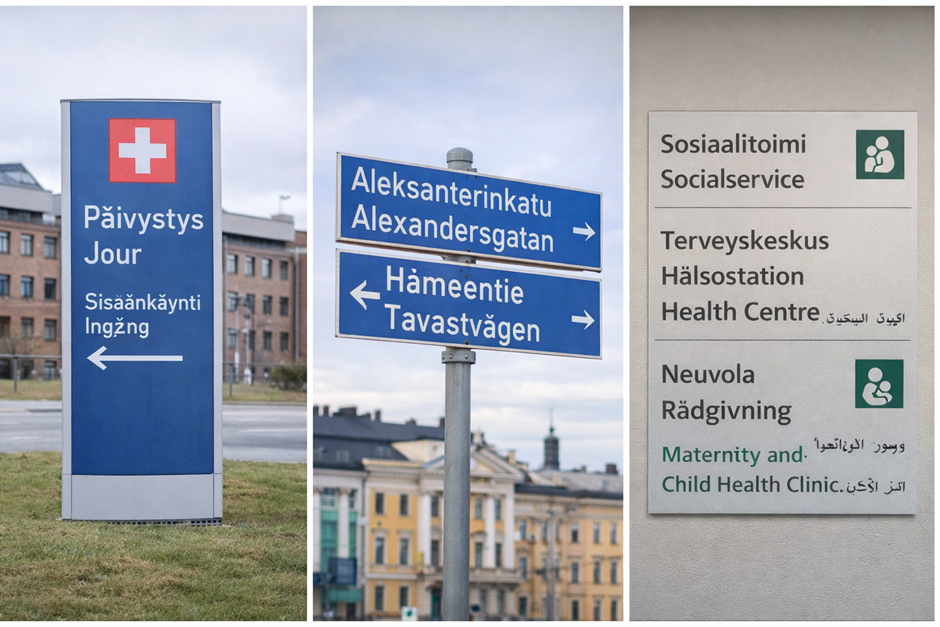
One of the most striking observations made during the study visit was the absence of overt conflict around language in the everyday functioning of the Finnish education system, probably because multilingualism in Finland is not framed as a zero-sum contest between linguistic communities, nor as a threat to national cohesion. It is, instead, treated as a normal condition of a modern society, which is managed through institutional design, rather than political confrontation.
This depoliticised approach does not imply the absence of linguistic diversity or historical sensitivity. Finland’s own linguistic landscape, shaped by the coexistence of Finnish, Swedish and a range of minority and migrant languages, has required careful accommodation over time. What distinguishes the Finnish approach, as encountered during the study visit, is the way in which language policy is embedded within professional and administrative processes, rather than allowing for it to be elevated into a recurring public controversy. Decisions about language of instruction, support for minority languages and transitions between languages are handled within schools and municipalities within guidelines provided by national frameworks, but which is often adapted to local realities.
A key factor in avoiding polarisation is the system’s emphasis on functionality, where language is approached primarily as a means of enabling learning, participation and progression, rather than as a marker of hierarchy or entitlement, which functional orientation reduces the incentive to instrumentalise language for broader political purposes. Because when language is understood as serving the learner, rather than the ideology of a group, the stakes of debate are lowered and space is created for pragmatic compromise.
Multilingualism is normalised through sequencing, rather than simultaneity, meaning that learners are not expected to master multiple languages at once and/or in ways that overwhelm their cognitive capacity. Instead, languages are introduced in a deliberate and staged manner, that is aligned with scholar developmental readiness and instructional purpose, which is a sequence that reinforces the insight that was discussed in Section 3 of the report. The notion is that cognitive depth in one language can support, rather than inhibit, the acquisition of additional languages. Multilingualism thus emerges as an outcome of careful design, rather than as an unstructured accumulation of demands.
Another important observation was the role of institutional trust in sustaining multilingual practices, and because educators are trusted to exercise professional judgement, language-related decisions do not require constant external validation or political arbitration. Teachers are able to adjust instruction, provide targeted support and communicate with parents without fear that flexibility will be interpreted as non-compliance or favouritism, which professional space is critical in multilingual settings, in that rigid rules are rarely adequate to manage the diversity of learner needs.
The Finnish approach also benefits from a broader societal consensus on the purpose of education, in which schooling is widely understood as a public good that is aimed at fostering capable, confident and socially integrated citizens and so, within this consensus, linguistic diversity is accommodated as part of the collective project, rather than as a centrifugal force that pulls communities apart. It is a shared understanding that reduces the temptation to frame language as a battleground for unresolved historical or political grievances.
For South Africa, these observations are particularly salient, in that language debates in the education system are often proxies for deeper anxieties about identity, power and belonging and in such an environment, policy choices can easily harden into symbols, which makes compromise difficult and implementation fraught. The Finnish experience does not offer a simple solution to these challenges, but what it does, however, is to demonstrate that multilingualism need not be inherently polarising if it is approached through institutional practice, rather than political theatre.
The implication is not that South Africa can or should depoliticise language through decree. Rather, it suggests that careful institutional design, including clear frameworks, professional autonomy and local flexibility, can gradually reduce the salience of language as a source of conflict and by embedding multilingualism in the routine workings of schools and educational governance, rather than in episodic public battles, it becomes possible to shift the conversation from identity defence to learner development.
This understanding provides a critical bridge to the next section. It will explore how institutional arrangements and infrastructure can be leveraged to expand access to mother-tongue education without displacement or exclusion. The question is no longer whether multilingualism is desirable, but instead, how it can be operationalised in ways that can strengthen both learning outcomes and social cohesion.
SECTION 5: THE ‘ONE FACILITY, TWO OR MORE SCHOOLS’ MODEL: PRAGMATIC EXPANSION WITHOUT DISPLACEMENT

Source: This composite image strips was generated specifically for this report using AI-assisted image generation (OpenAI) and do not depict identifiable individuals. Images are illustrative and contextual in nature.
One of the most generative reflections to emerge from the study visit was not a single policy instrument observed in Finland, but an institutional logic that has direct relevance for South Africa’s most intractable education debates. Throughout engagements with Finnish educators and administrators, it became clear that the expansion of linguistic accommodation has been approached as a matter of capacity-building, rather than redistribution. This insight provides the conceptual foundation for what this report describes as the “one facility, two or more schools” model.
In Finland, the use of shared educational facilities to accommodate different linguistic or curricular streams is neither exceptional nor controversial, in that school buildings are understood as public assets serving a defined community, not as exclusive territories tied to a single linguistic identity. Within this framework it becomes possible for different language streams to coexist in separate schools located within the same physical infrastructure. Their independence is secured in that they are governed by clearly separated administrative arrangements and supported by professional collaboration. Importantly, this coexistence does not require the dilution of educational standards or the erosion of institutional culture, on the contrary, it is enabled by clarity of purpose and mutual recognition of legitimacy.
Transposed conceptually to South Africa, this approach offers a way out of the false binary that has long dominated debates about language and schooling. Too often, the expansion of mother-tongue education in African languages is perceived as necessitating the displacement or downgrading of existing Afrikaans-medium schools, particularly those with strong infrastructure and institutional capacity, which framing has fuelled resistance, litigation and political mobilisation, while doing little to expand overall access or improve outcomes.
The “one facility, two or more schools” model rejects this zero-sum logic. It starts from the premise that South Africa’s educational challenge is not the redistribution of scarcity, but the expansion of effective provision. Many Afrikaans-medium schools possess physical infrastructure, governance experience and pedagogical expertise that could support additional language streams without undermining their existing educational offering. By treating facilities as platforms for expansion, rather than prizes to be reallocated, it becomes possible to grow access to mother-tongue education in African languages while preserving institutional stability.
Crucially, this model does not imply forced integration or administrative homogenisation. Distinct schools or language streams would retain their identity, governance structures and pedagogical focus, even while sharing physical space and certain services, with the emphasis is on functional co-location, rather than symbolic merger. This distinction matters, since it reduces the perceived threat to existing communities whilst at the same time opening space for practical cooperation, which the Finnish experience suggests can work where roles are clear, expectations are aligned and professional trust is present.
The study visit also underscored that shared-facility models require careful institutional design, where timetabling, staffing, leadership responsibilities and accountability mechanisms must be clearly delineated, because without such clarity the co-location of different schools could risk becoming a source of friction, rather than synergy. However, when properly structured, shared facilities can foster informal professional exchange, resource efficiency and it can promote a broader sense of common purpose across the linguistic lines.
From a social cohesion perspective, the significance of this model lies in its ability to decouple language from conflict, in that it doesn’t frame language policy as a struggle over ownership and loss, but rather as a collective effort to expand opportunity. The physical proximity of different language communities that are enabled to operate side by side within a shared public institution, can normalise diversity without forcing premature integration. In this sense, cohesion is built through coexistence and mutual recognition and not through enforced uniformity.
This section does not propose an immediate blueprint for implementation, nor does it underestimate the legal, administrative and political complexities involved, instead, it advances a conceptual pathway grounded in the logic observed during the study visit: that inclusive systems grow by adding capacity, not by redistributing insecurity. The task for South Africa is to explore how this logic might be operationalised within its constitutional framework and by/through the provincial education systems.
The implications of this model extend beyond infrastructure. They point towards a broader reorientation of policy thinking, away from defensive debates about loss and entitlement, and towards constructive questions about how public assets can be mobilised to serve a multilingual society. It is these systemic implications, and their relationship to education as a driver of social cohesion and nation-building, that the report addresses in the next section.
SECTION 6: IMPLICATIONS FOR SOUTH AFRICA: FROM POLICY PARALYSIS TO PRAGMATIC ADAPTATION

Source: This composite image strips was generated specifically for this report using AI-assisted image generation (OpenAI) and do not depict identifiable individuals. Images are illustrative and contextual in nature.
The preceding sections have deliberately avoided treating the Finnish experience as a template to be copied. The study visit consistently reinforced the point that education systems are products of history, institutional maturity and social consensus. What Finland offers South Africa is therefore not a model to replicate, but a set of orienting insights that help reframe entrenched policy debates and open space for practical adaptation.
A first implication concerns the way language policy is positioned within the South African education discourse. Language of instruction has become a highly charged proxy for broader struggles over identity, power and historical redress. As a result, policy discussions often oscillate between abstract constitutional principle and confrontational politics, with limited attention to classroom-level pedagogy. The Finnish experience, as encountered during the study visit, suggests that progress depends on shifting the centre of gravity back to learning itself: how children best acquire understanding, confidence and cognitive depth over time.
This reframing has consequences for implementation. In South Africa, mother-tongue education in African languages is widely endorsed in principle, but weakly supported in practice and what is more is that the gap is not merely one of political will, but of institutional capability. Teacher preparation, curriculum materials, assessment practices and school-level governance have not been aligned in a coherent way to support sustained mother-tongue instruction beyond the early grades. The study visit underscores that language policy cannot succeed as a stand-alone intervention, in that it must be embedded within a professional ecosystem that equips teachers in a way that they are empowered to exercise judgement and to adapt instruction to learner needs.
A second implication relates to governance and trust. Finland’s trust-based system cannot simply be imported into a context marked by uneven capacity and historical mistrust. However, the lesson is not that trust must wait until perfection is achieved. Rather, selective and graduated trust, linked to professional development, mentoring and clear accountability, can begin to replace overly centralised compliance regimes that often stifle innovation. Without some restoration of professional agency, language policy in South Africa is likely to remain performative, rather than transformative.
The “one facility, two or more schools” concept discussed in Section 5 illustrates how this logic might be operationalised pragmatically. Accordingly, instead of framing policy choices as redistributive battles over existing institutions, South Africa could pilot expansionary arrangements that add capacity whilst protecting stability through such pilots that would allow provincial education departments to learn incrementally, to refine governance arrangements and to steadily build confidence among communities. Importantly, this approach aligns with the constitutional principle of reasonable practicability, thus avoiding absolutist positions that invite legal contestation, but deliver little educational progress.
A further implication concerns matters sequencing and patience. The study visit highlighted Finland’s willingness to think in generational, rather than electoral timeframes. South Africa’s education system has been subject to frequent policy shifts, often driven by political urgency, rather than pedagogical evidence. The Finnish experience suggests that sustained improvement requires stability, consistency and the courage to allow reforms time to mature, which in the context of language policy means accepting that cognitive and social returns may only become visible over time and by resisting the temptation to declare success or failure of the policy prematurely.
Finally, the Finnish case underscores the inseparability of education policy and social cohesion, whereas in South Africa, language debates are often treated as threats to unity that have to either be managed or suppressed. The study visit offers a different perspective: that carefully designed educational arrangements can, over time, reduce the salience of language as a site of conflict. And so, by embedding multilingualism within routine institutional practice, rather than staging it as a recurring political showdown, it becomes possible to normalise diversity and to build a shared sense of investment in the public education system.
Taken together, these implications point towards a shift from policy paralysis to pragmatic adaptation, meaning that the question is no longer whether South Africa should embrace multilingualism and mother-tongue education (since that principle is already constitutionally settled) and that the real challenge now lies in designing institutional pathways that make these commitments workable, credible and socially sustainable. It is this longer-term relationship between education, language and nation-building that the report turns to in the final analytical section.
SECTION 7: EDUCATION, SOCIAL COHESION AND THE LONG VIEW OF NATION-BUILDING

Source: This composite image strips was generated specifically for this report using AI-assisted image generation (OpenAI) and do not depict identifiable individuals. Images are illustrative and contextual in nature.
Throughout the study visit, one theme surfaced repeatedly, often implicitly, rather than by design: the extent to which education systems either stabilise or strain the social fabric of a society. In Finland, schooling is not burdened with the task of resolving every social tension, yet it is clearly understood as a foundational institution through which cohesion is cultivated over time. This perspective offers a useful lens through which to reflect on South Africa’s own struggles to reconcile diversity, inequality and shared belonging.
In the South African context, education has long been expected to perform contradictory roles. It is tasked simultaneously with redress, social mobility, nation-building and economic competitiveness. Language policy, in particular, has become a fault line where these expectations collide, because when poorly designed or inconsistently implemented, language arrangements in schools can entrench exclusion, foster resentment and reinforce perceptions of injustice, but conversely, when approached with care and institutional coherence, the policies can create conditions that promote mutual recognition and a shared investment in the future.
The Finnish experience, as observed during the study visit, suggests that social cohesion is not produced through symbolic gestures or forced uniformity, but rather, it emerges incrementally and through institutions that function predictably, that treat all scholars fairly and that execute its duties and functions competently. Learners who experience schooling as a place where they are understood, supported and challenged are more likely to develop trust in public institutions and confidence in their own agency and as such, language plays a central role in this process, not as an identity badge, but as the medium through which understanding and participation are made possible.
This insight has particular relevance for multilingual societies marked by historical inequality, because in such contexts, premature demands for linguistic neutrality or assimilation risk reproducing disadvantage under the guise of unity. The study visit reinforced the idea that social cohesion is not threatened by difference per se, but rather when unfair treatment amongst the various communities is perceived and when that the difference is considered unmanaged, ignored and/or instrumentalised. Education systems that acknowledge linguistic diversity and design for it proactively are better positioned to prevent language from becoming a site of grievance.
At the same time, the Finnish case cautions against romanticising cohesion as a short-term policy outcome. Trust, legitimacy and shared purpose are accumulated slowly through repeated institutional encounters. Schools contribute to this nation-building process not by preaching cohesion, but by embodying it in their everyday practice through, for example, ensuring fair access to the available resources, respectful engagement with difference and ensuring consistent expectations for all learners. Over time, these experiences help shape how individuals relate to, and amongst, one another, and to the state.
For South Africa, taking such a this long view is particularly important within the context of the apartheid education legacies, which continue to cast a long shadow. The impatience for rapid transformation, is both understandable and politically potent, but what the study visit underscores is the risks of conflating speed with progress, because durable cohesion is unlikely to emerge from abrupt policy shifts that outpace institutional capacity or community buy-in. It requires steady expansion of opportunity, clarity of purpose and the avoidance of zero-sum framing.
The “one facility, two or more schools” model that was discussed earlier in this report can be understood in this light. By enabling coexistence without displacement, it offers a practical mechanism through which diversity can be normalised, rather than dramatized. Such arrangements do not erase difference, but situate it within a shared public institution oriented toward collective benefit and in doing so, they create everyday opportunities for contact, recognition and mutual respect, without forcing premature integration or uniformity.
Ultimately, the contribution of education to the nation-building project will lie less in its capacity to resolve social tensions directly, and more so in its ability to create a credible platform for fostering a shared future. When learners across linguistic and cultural lines experience schooling as fair, enabling and dignified, the foundations for cohesion are laid quietly, but persistently, which the Finnish experience, as encountered during the study visit, illustrates. It shows how this can be achieved through institutional coherence and pedagogical seriousness, rather than rhetorical flourish.
This brings the report to its concluding reflections: how the insights drawn from the Finland study visit can inform a realistic, principled and forward-looking approach to education reform in South Africa, one that recognises language as a resource, not a threat, and schooling as a long-term investment in a cohesive society.
SECTION 8: CONCLUSION – FROM STUDY VISIT TO POLICY ACTION

Source: This composite image strips was generated specifically for this report using AI-assisted image generation (OpenAI) and do not depict identifiable individuals. Images are illustrative and contextual in nature.
This report has deliberately resisted the temptation to turn the Finland study visit into a search for ready-made solutions. Finland’s education system is the product of a distinct social history, deep institutional maturity and high levels of professional trust that cannot simply be transplanted into the South African context. Yet, to stop at reflection alone would be to underuse the value of the study visit. The purpose of learning from another system is not imitation, but disciplined adaptation. This conclusion therefore moves beyond synthesis and sets out clear, actionable pathways through which the insights gained can be tested, refined and operationalised in South Africa
The central lesson emerging from the study visit is that debates about language in education become unproductive when they are framed as ideological contests or zero-sum struggles over loss and entitlement. In Finland, language policy succeeds not because one position “wins”, but because language is treated as a pedagogical and institutional question, embedded within a wider system that prioritises learner comprehension, professional judgement and long-term stability. Where South Africa has often approached language as a political proxy, Finland approaches it as a practical design challenge.
Crucially, the study visit surfaced a nuanced tension that is frequently absent from South African debates. Finnish academics did not uniformly present mother-tongue education as the decisive explanatory factor behind system performance. At the same time, there was broad agreement among Finnish educators and within the international frameworks referenced during the visit, that education in a learner’s first language contributes meaningfully to learner dignity, identity, confidence and belonging. The implication for South Africa is not to elevate mother-tongue education into a panacea, nor to downgrade it as incidental, but to locate it properly: as a mechanism that can reduce avoidable cognitive and social barriers when supported by appropriate institutional capacity.
From this perspective, the most pressing challenge facing South Africa is not constitutional principle or policy intent, both of which are already settled, but institutional execution. Mother-tongue education has remained weakly implemented, because it has been treated as a stand-alone policy aspiration, rather than as part of an integrated system involving teacher preparation, curriculum design, governance arrangements and phased progression into additional languages. The Finnish experience reinforces the point that language policy cannot succeed in isolation. It must be carried by professional capability, clarity of roles and a stable institutional environment.
A recurring weakness in South Africa’s approach to language policy has been the gap between constitutional commitment and institutional follow-through. While the legal and policy framework for multilingualism is well established, responsibility for implementation is often diffuse, unevenly exercised and largely reactive. Language rights tend to surface institutionally only when disputes arise, rather than being embedded into routine administrative practice, which pattern has contributed to gradual erosion through neglect, rather than overt policy reversal; reinforcing the tendency towards default solutions that privilege convenience over constitutional intent. Addressing this gap requires not new principles, but stronger mechanisms of coordination, visibility and accountability within the existing system.
A further and critical consideration, repeatedly underscored during the study visit discussions, is the risk of default anglicisation within the South African education system. In the absence of intentional institutional design, parental aspiration, labour-market signals and historical patterns of resource allocation will continue to drive schooling towards English as the dominant medium of instruction. This trajectory is already evident and has the cumulative effect of confining high-quality indigenous-language schooling largely to rural and township contexts, while suburban and well-resourced areas remain linguistically homogeneous. Such an outcome undermines both educational equity and the constitutional commitment to multilingualism, not by overt exclusion, but by quiet structural drift.
As the Finnish experience makes clear, linguistic erosion rarely occurs through formal policy reversal, it occurs when institutional environments quietly normalise convenience over rights, leading speakers of less dominant languages to relinquish their linguistic claims long before those claims are ever legally contested.
The “one facility, two or more schools” model offers a concrete mechanism to interrupt this dynamic. By enabling the establishment of fully fledged isiZulu-, isiXhosa- or other indigenous-language schools within suburban settings, using existing infrastructure and clear governance separation, it becomes possible to decouple language from geography and socio-economic status. In doing so, mother-tongue education in African languages is repositioned not as a remedial option for marginalised communities, but as a credible, high-quality choice within the full spectrum of South African society. This shift is essential if multilingualism is to be sustained in practice, rather than eroded by default.
The report therefore argues for a decisive shift in approach: from redistributive confrontation to expansionary design. Nowhere is this more evident than in the proposed “one facility, two or more schools” model that, rather than framing the expansion of African-language mother-tongue education as requiring the displacement or erosion of existing Afrikaans-medium institutions, the model treats school infrastructure as a public asset capable of supporting multiple language streams under clearly defined and autonomous governance arrangements. This approach rejects the logic of loss and instead focuses on the expansion of effective provision that services catering for a multilingual community.
The recommendation flowing from this insight is not immediate system-wide implementation, but structured piloting, where provincial education departments, in partnership with willing school governing bodies and communities, could identify a small number of sites where shared-facility, multi-school arrangements can be tested under controlled conditions. These pilots should be deliberately modest in scale, rigorously governed and carefully evaluated over time. Their purpose would be to build institutional learning, rather than to score symbolic victories.
Alongside this, the study visit points to the necessity of sequencing and patience, for if Finland’s education success, that rests in part on its resistance to perpetual reform, is anything to go by. South Africa’s education system, by contrast, has often been characterised by frequent policy shifts that outpace institutional capacity and exhaust professional goodwill. Language policy, in particular, demands a long view. Cognitive, social and cohesion-related outcomes accumulate gradually, and premature declarations of success or failure are more likely to undermine credibility than accelerate progress.
The study visit also highlights the importance of clearly located institutional responsibility for monitoring and normalising linguistic rights. In Finland, this function is exercised through a small specialist unit within the Ministry of Justice, supported by the supervisory role of the Parliamentary Ombudsman. The significance of this arrangement lies not in its institutional scale or coercive power, but in its effect: linguistic rights are treated as an ordinary and ongoing matter of administrative compliance, rather than as an episodic source of dispute or litigation. For South Africa, the implication is not necessarily the creation of new institutions, but the need to clarify ownership, coordination and proactive oversight within the existing governance landscape, so that language rights are sustained through everyday institutional practice, rather than reactive intervention.
A further actionable implication concerns professional agency. The Finnish system’s ability to manage linguistic diversity without polarisation is inseparable from the trust placed in educators as professionals. While South Africa cannot assume equivalent levels of capacity across the system, it can move incrementally towards graduated trust, linked to professional development, mentoring and accountability. Without restoring some measure of professional discretion at school and classroom level, language policy risks remaining performative, rather than transformative.
Finally, the study visit reinforces an often overlooked point, being that education policy is inseparable from the broader project of social cohesion and nation-building. Language becomes a source of conflict, not because diversity exists, but because institutional arrangements fail to manage it fairly and predictably. When learners experience schooling as enabling, dignified and credible, regardless of language, trust in public institutions grows, and thus, over time, this quiet institutional legitimacy does more to foster cohesion than any symbolic gesture or rhetorical appeal.
In moving from study visit to policy pathway, the task ahead is therefore clear. South Africa does not need another round of abstract debate about language in education. It needs disciplined experimentation, expansionary institutional design and the courage to move beyond fear-driven binaries. The Finland study visit does not tell South Africa what to become. It shows what becomes possible when language is treated seriously, institutions are designed coherently, and reform is pursued with patience rather than panic.
The Finnish experience demonstrates that caution in policy design should not be confused with scepticism about cognitive foundations. While Finnish scholars rightly resist treating mother-tongue education as a rigid or deterministic policy instrument, the evidence and practice observed during the study visit reinforce the importance of strong first-language grounding in supporting cognitive control, reflective thinking and meaningful participation in learning, particularly in contexts marked by inequality and linguistic exclusion.
If this report succeeds, it will not be because it resolves long-standing disagreements. It will be because it helps shift the debate from ideology to implementation, from confrontation to construction, and from paralysis to pragmatic action.
SECTION 9: METHODOLOGICAL NOTE AND SOURCE BOUNDARIES

Source: This composite image strips was generated specifically for this report using AI-assisted image generation (OpenAI) and do not depict identifiable individuals. Images are illustrative and contextual in nature.
This report is intentionally bounded in scope. Its analysis and conclusions are derived exclusively from the Finland study visit and the documentary material associated with it. This includes the presentations, briefing notes, background papers and discussion records contained in the six core documents provided prior to drafting. No additional site visits or interviews were undertaken for purposes of this report, and no post-visit research was conducted beyond limited contextual consultation explicitly identified as such.
Where reference is made to international norms or frameworks, including those associated with the United Nations system, such references serve two limited purposes. First, they reflect the conceptual environment within which Finnish educators and officials framed their own practice during the study visit. Second, in a small number of instances, they reflect post-visit contextual consultation undertaken to situate Finnish perspectives in relation to mainstream international thinking. Such references are used for orientation and contrast, not as primary evidence or external validation.
The report does not seek to adjudicate global academic debates on education, language or cognitive development. Alternative perspectives are acknowledged where they arose during the study visit, and they are addressed through the logic, reasoning and practical experience articulated by Finnish interlocutors. No independent literature review was conducted, and no claims are made that would require empirical substantiation beyond the study visit record.
Analytically, the report adopts a policy-reflective, rather than policy-prescriptive approach. Its purpose is to distil insights, identify institutional logics and explore plausible pathways for adaptation within the South African context. Proposals such as the “one facility, two or more schools” model are presented as conceptual constructs informed by observed practices, not as ready-made implementation plans.
This methodological discipline serves two purposes. Firstly, it preserves the integrity of the study visit as a learning exercise, rather than a pretext for advocacy, and secondly, it ensures transparency about the limits of inference and transferability. Readers are invited to assess the arguments advanced here on the basis of their coherence, plausibility and contextual sensitivity, rather than on claims of universal applicability.
In this sense, the report should be read as a contribution to an ongoing policy conversation that is grounded in observation, attentive to context and open to refinement, rather than as a definitive statement on education reform.
The report is supported by a series of annexures that document selected engagements undertaken during the study visit, as well as a concluding annexure that outlines policy options flowing from the analysis. These annexures are not intended as extensions of the main analysis, nor as exhaustive records of discussion, but as contextual lenses that illuminate specific dimensions of the enquiry. Each annexure reflects a distinct institutional or community perspective, including governance, educational practice, academic analysis and minority-language experience and should be read as complementary, rather than cumulative. The core arguments and recommendations of the report are developed in the main text, with the annexures providing depth, triangulation and transparency without altering the analytical conclusions.
Where reference is made to mainstream international thinking on the cognitive dimensions of mother-tongue education, this reflects limited post-visit contextual engagement with established UNESCO frameworks, rather than a comprehensive literature review.
SECTION 10: ACKNOWLEDGEMENTS AND CLOSING NOTE

Source: This composite image strips was generated specifically for this report using AI-assisted image generation (OpenAI) and do not depict identifiable individuals. Images are illustrative and contextual in nature.
The Inclusive Society Institute wishes to express its appreciation to the Embassy of Finland in Pretoria for its assistance in facilitating the study visit. The Embassy played an important enabling role in supporting engagement with Finnish institutions and interlocutors, and its cooperation contributed meaningfully to the depth and coherence of the programme.
This report was made possible by the Finland study visit and the generosity of the educators, administrators and officials who engaged openly with the delegation. Their willingness to explain not only what works within the Finnish education system, but why it works, and under what conditions, provided the intellectual substance upon which this analysis rests. The value of the visit lay less in exposure to exemplary institutions than in the quality of dialogue about pedagogy, governance and long-term educational purpose.
The six core documents provided to the delegation formed the documentary backbone of this report. They ensured a shared evidentiary base across participants and enabled reflection to continue beyond the site visits themselves. The discipline of working strictly within these materials has been intentional, preserving the integrity of the study visit as a bounded learning exercise, rather than an open-ended research project.
The report also benefited from the opportunity to reflect on Finland’s experience through a South African lens that is attentive to constitutional commitments, institutional constraints and social realities. This comparative posture has been critical in avoiding both idealisation and dismissal. The aim has not been to borrow solutions, but to recover a sense of pragmatic imagination about what is possible when policy, institutions and professional practice are aligned.
As a closing note, it should be emphasised that the value of this report will ultimately not be measured by agreement with its conclusions, but by its capacity to shift the quality of debate. If it helps move discussions about language, education and social cohesion away from fear-driven binaries and towards practical, expansionary thinking, it will have served its purpose.
The Finland study visit is now complete. The work of reflection, adaptation and cautious experimentation lies ahead.
ANNEXURE A: THE MINISTRY OF JUSTICE AND THE GOVERNANCE OF LINGUISTIC RIGHTS IN FINLAND
The engagement with Finland’s Ministry of Justice provided a critical institutional lens through which to understand how linguistic rights are conceptualised, governed and sustained over time. Unlike education-focused discussions that centre on pedagogy and classroom practice, the Ministry’s contribution situated language firmly within the architecture of constitutional obligation, public administration and long-term state responsibility. The presentation and interview stressed that Finland’s multilingual settlement is not sustained by sentiment or symbolism, but through a deliberately constructed legal and governance framework, that is continuously monitored and incrementally adjusted as societal conditions change.
At the core of this framework lies Section 17 of the Finnish Constitution, which establishes Finnish and Swedish as equal national languages and which obliges public authorities to meet the cultural and societal needs of both language communities on an even basis. The Constitution also recognises Sámi, Romani and sign languages and affirms the right of all language groups to use and develop their own language and culture. Importantly, Finland does not formally designate “official minority languages”. Instead, it differentiates between national languages, which enjoy strong and enforceable rights in dealings with public authorities, and other languages, whose protection is shaped by a combination of sector-specific legislation and practical measures aimed at ensuring comprehension and access. This constitutional logic already signals a key feature of the Finnish approach: linguistic equality is pursued through structured differentiation, rather than through uniform treatment.
The Ministry of Justice carries overall responsibility for promoting and monitoring linguistic rights across the Finnish state. Its role is not operational, but coordinative and supervisory. The Ministry drafts language-related legislation, advises other ministries on the linguistic implications of proposed laws, prepares the Government Report on the Application of Language Legislation every four years, and coordinates a network of language experts across the public service. Remarkably, this extensive mandate is discharged by a very small specialist unit, with only three officials directly responsible for linguistic rights. This institutional design reflects a broader Finnish assumption: that linguistic rights are realised not through enforcement-heavy bureaucracies, but through clear legal frameworks, shared norms, and continuous inter-institutional coordination.
Demographically, Finland remains a predominantly Finnish-speaking country, with Finnish speakers constituting just over eighty-four per cent of the population and Swedish speakers slightly above five per cent. Sámi speakers account for a very small proportion of the population, while speakers of other languages have increased notably in recent years, largely as a result of immigration. Linguistic rights are partly territorially organised through the designation of municipalities as unilingual or bilingual, which determines the obligations placed on local authorities, but central government bodies are however always bilingual, regardless of their physical location. This system reflects a balance between geographic concentration and individual mobility, because it acknowledges that language communities are not confined to fixed spaces, even where their historical presence is regionally rooted.
A central feature of the Finnish model is its reliance on long-term strategy, rather than ad hoc intervention as is illustrated by the National Languages Strategy, first adopted in 2012 and revised in 2021, which provides an overarching framework for the protection and development of Finnish and Swedish. Its preparation process was deliberately extensive, involving stakeholder hearings, expert interviews, participatory consultations and political steering at the highest level. The Strategy is built around three guiding objectives, being the right to services in one’s own language, safeguarding the status of the national languages and the promotion of what is described as “living bilingualism”. These objectives are translated into sixty-two concrete measures, each assigned to specific ministries, ensuring that responsibility for implementation is dispersed, rather than centralised.
One of the most instructive aspects of the Ministry’s presentation was its frank acknowledgement of English as a growing structural pressure within Finnish society. English is not framed as an existential threat to Finnish, but its expanding use, particularly in universities, research and specialised professional domains, is recognised as a potential source of long-term domain loss. Notably, research commissioned by the government indicates that English has exerted greater pressure on Swedish than on Finnish, with many public officials reporting stronger proficiency in English than in Swedish. The policy response to this trend is not prohibitive, but instead, it focuses on strengthening national-language capacity by ensuring that graduates can function professionally in Finnish, by developing terminology in national languages and by promoting multilingual practices, rather than defaulting to English as a convenient substitute.
The interview further highlighted a recurring structural vulnerability in multilingual systems, which is the tendency for minority-language speakers to relinquish their linguistic rights in mixed language environments. In bilingual workplaces and public settings, Swedish speakers often switch to Finnish, because it is more widely understood, more institutionally dominant or simply more convenient, but in doing so this pattern, over time, risks hollowing out formal rights through everyday practice. The Ministry recognises this as a systemic problem, rather than an individual failure. Its response emphasises the need for authorities to signal, through visible practices and service design, that the use of one’s own language is both legitimate and welcomed. In this respect, linguistic rights are sustained as much by institutional cues and planning, as by formal legal entitlements.
Enforcement within the Finnish system relies far less on sanctions than on legitimacy and oversight, which is illustrated by there being no direct penalties for authorities that fail to meet their linguistic obligations and instead, compliance is encouraged through monitoring, guidance and reputational accountability. The Parliamentary Ombudsman plays a key supervisory role, and language-related discrimination may also fall within the remit of the Non-Discrimination Ombudsman. The Ministry’s view is that sustained compliance flows from a deeply embedded administrative culture that takes legality seriously, rather than from punitive mechanisms. Whether this approach would function equally well in other contexts is acknowledged as an open question.
From a South African perspective, the Ministry of Justice engagement offers several cautionary and constructive insights. It demonstrates that linguistic drift towards a dominant language, whether Finnish in relation to Swedish, or English in relation to both, occurs by default unless actively countered through institutional design and it also illustrates that minority-language protection depends less on rhetorical commitment than on careful planning, visible service environments and ongoing monitoring. Perhaps most importantly, it reinforces the idea that multilingualism is not self-sustaining and that it must be continually reproduced through political will, legal clarity and administrative practice.
This annexure therefore anchors the study visit’s broader conclusions in a governance reality: that language policy is not merely an educational concern, but a constitutional and institutional project that unfolds over generations. In that sense, Finland’s experience speaks directly to South Africa’s own challenge, not of declaring multilingualism, but of designing institutions capable of making it endure.
ANNEXURE B: MOTHER-TONGUE EDUCATION, MULTILINGUAL PEDAGOGY AND THE FINNISH EDUCATIONAL APPROACH
The engagements with the Finnish National Agency for Education, the Ministry of Education and Culture and education practitioners provided a detailed and at times counter-intuitive perspective on mother-tongue education and multilingualism within the Finnish education system. While Finland is internationally recognised for its strong commitment to linguistic rights and cultural diversity, the study visit revealed a more nuanced position than is often assumed in global debates on mother-tongue instruction.
A defining feature of the Finnish approach is that multilingualism is not treated as an exception or remedial category, but as a normal and universal condition of schooling. Finnish education policy proceeds from the premise that every learner is, in practice, multilingual, whether through national languages, foreign languages, dialects or emerging hybrid language practices. This assumption is embedded in the National Core Curriculum for Basic Education and underpins the concept of the “language-aware school,” in which every teacher is regarded as a language teacher and every subject is understood to carry its own linguistic demands. Language is therefore primarily approached as a medium of learning and identity formation, and is applied to promote social interaction, rather than as a discrete or isolated subject area.
Within this framework, mother-tongue education is not positioned as an absolute or exclusive driver of cognitive development, instead the Finnish interlocutors expressed caution at treating mother-tongue instruction as a singular or deterministic explanatory variable. They seem to be somewhat dismissive of its role in supporting comprehension, metalinguistic awareness and the development of reflective cognitive control. In this sense, Finnish practice distinguishes between recognising the cognitive value of strong first-language grounding and resisting its elevation into a stand-alone policy solution detached from pedagogy, teacher capacity and institutional context.
This position does not reflect indifference to mother-tongue instruction. On the contrary, the Finnish Constitution explicitly guarantees the right of every person to maintain and develop their own language and culture. In practice, municipalities may offer mother-tongue instruction for learners whose home language is not Finnish, Swedish or Sámi, supported by targeted state funding. Participation in such programmes has expanded steadily, with instruction currently provided in dozens of languages. However, Finnish policymakers openly acknowledge that these programmes reach only a portion of eligible learners and are constrained by practical considerations such as staffing, scale and sustainability.
Crucially, mother-tongue instruction in Finland is understood primarily as a mechanism for supporting identity, self-confidence and belonging, rather than as a substitute for acquiring proficiency in the language of schooling. Finnish educators consistently stressed that strong competence in the societal language is indispensable for educational progression, labour market participation and social integration and for this reason, mother-tongue education is deliberately structured to complement, rather than compete with, instruction in Finnish or Swedish. This logic is reinforced through pedagogical practices such as translanguaging, in which learners are encouraged to draw on all their linguistic resources to support understanding across subjects, whilst they progressively master the academic language that is required for formal learning.
The Finnish experience also highlights the importance of institutional design that is aimed at protecting linguistic diversity without entrenching segregation based on language. The parallel Finnish- and Swedish-language school systems illustrate how language rights can be institutionalised through separate, but equal educational pathways, which is often shared within facilities. At the same time, Finnish officials cautioned that even well-protected minority languages remain vulnerable to gradual erosion if institutional boundaries and responsibilities are not clearly defined and/or if collaborative arrangements proceed without deliberate linguistic safeguards. This concern was particularly evident in discussions around Swedish-language education, where it was pointed out that the maintenance of a distinct linguistic space within a school is regarded as essential to preventing assimilation of Swedish into the dominant Finnish language environment.
For learners with migrant backgrounds, Finland adopts a strong inclusive approach, where migrant learners attend mainstream schools according to their age and where they are supported by preparatory education, second-language instruction and subject-specific language support where it is so required. Mother-tongue instruction is offered as an additional layer, not as an alternative pathway, with the underlying policy objective being clear, namely the integration into a shared education system, coupled with recognition of linguistic identity, rather than parallel systems that risk marginalisation or long-term disadvantage.
Throughout the discussions, Finnish practitioners returned repeatedly to the theme of balance. Excessive emphasis on language rights without adequate attention to pedagogical coherence was seen as counter-productive, just as neglect of linguistic identity was recognised as socially corrosive. The Finnish model therefore seeks to hold these tensions in productive equilibrium, by affirming linguistic diversity, investing in language awareness across the curriculum and by ensuring that all learners acquire strong competence in the languages that structure public life.
For South Africa, the relevance of this experience does not lie in the direct replication of the Finnish model, but rather through in the strategic insights that the model offers. The Finnish case demonstrates that mother-tongue education need not be framed as an all-or-nothing proposition, but instead it can and should be embedded within a broader multilingual pedagogy that supports identity and belonging while maintaining clear pathways for individual scholars into the language or languages of wider social community. The Finnish model also underscores the important and necessary role that institutional clarity, professional autonomy and long-term policy consistency plays in preventing linguistic rights from becoming mere symbolic commitments which end up eroding those rights through neglect.
ANNEXURE C: COGNITIVE DEVELOPMENT, LANGUAGE AND THE PEDAGOGICAL LOGIC OF CO-LOCATED SCHOOLING – INSIGHTS FROM THE UNIVERSITY OF HELSINKI
Academics attached to the University of Helsinki’s Faculty of Education, introduced an important layer of analytical nuance, particularly in relation to the cognitive development of children, multilingual learning and the institutional logic that underpins the Finnish co-located schooling model. Rather than reaffirming conventional assumptions about mother-tongue instruction as an unqualified cognitive advantage, the Helsinki engagements foregrounded a more complex and empirically cautious understanding of how language, cognition, identity and pedagogy interact over time. These perspectives should be read as emerging from a high-capacity educational system and should not be assumed to invalidate mainstream international findings, which are largely derived from low-capacity and unequal schooling contexts where language functions as a far more binding cognitive constraint.
Finnish scholars were explicit in cautioning against reductive interpretations of the relationship between language of instruction and cognitive performance and whilst there is broad agreement that early learning in a familiar language can support comprehension and initial engagement, these particular academics were of the view that the evidence does not support strong claims that mother-tongue instruction, in isolation, produces superior long-term cognitive outcomes across subjects. Empirical research in Finland suggests that the initial performative differences observed among learners educated in a second language tended to diminish over time, provided of course that the teaching quality is strong and that learners acquire sufficient proficiency in the language of instruction. Cognitive development, according to this view, is less a function of linguistic purity than it is of pedagogical coherence and sustained instructional quality.
This position challenges dominant international narratives that present mother-tongue education primarily as a cognitive intervention. Helsinki academics were clear that such arguments are difficult to sustain empirically, not least because children’s linguistic environments are inherently complex and fluid. Learners move continuously between languages across home, school, peer interaction, media and digital spaces, making it methodologically difficult to isolate language of instruction as a single causal variable. The Finnish research perspective therefore resists instrumentalising language purely as a cognitive tool, instead situating cognition within broader social, cultural and pedagogical ecosystems.
At the same time, the Helsinki discussions emphatically reaffirmed the importance of language for identity, dignity and belonging and so while the cognitive case for mother-tongue instruction may be context-dependent and empirically nuanced, the identity-forming role of language was considered foundational. Scholars emphasised that language carries emotional memory, intergenerational continuity and cultural meaning that cannot be substituted by functional proficiency in a dominant or global language.
Nursery rhymes, stories, idiomatic expressions and everyday linguistic practices were repeatedly cited as key mechanisms through which children develop a sense of self and continuity with their community and so from this perspective, the justification for maintaining mother-tongue education rests less on cognitive optimisation and more on the ethical and social imperatives of recognition, respect and belonging.
The Helsinki engagements also offered critical insight into the concept of multilingual cognitive development, since rather than viewing multilingualism as a deficit or a transitional burden, Finnish scholars highlighted a growing body of evidence that children possess a greater capacity for managing multiple linguistic systems than is often assumed. Practices such as translanguaging, code-switching and flexible language use were described not as confusion, but as adaptive cognitive strategies that can strengthen executive function, problem-solving and metalinguistic awareness of the scholars. Importantly, this does not negate the need for strong proficiency in the language of instruction, which remains crucial, but it also underscores the parallel value of pedagogical approaches that consciously acknowledge and work with the learners’ full linguistic repertoires.
These insights were closely linked to the Finnish experience of co-located schools. Drawing on long-term ethnographic research, Helsinki academics explained that co-location, in itself, does not automatically produce bilingualism or social integration. In many Finnish co-located schools, pupils remain socially and linguistically separated despite certain facilities, such as dining halls and playgrounds, being shared, which reflects deeply embedded institutional cultures of parallel monolingualism. The persistence of such separation is not accidental, but the result of deliberate policy choices aimed at preserving minority-language spaces as lived majorities within the school environment. Moreover from a Finnish perspective, a degree of institutional separation has historically always been viewed as a necessary imperative to prevent language dilution and assimilation.
However, the Helsinki discussions also revealed growing ambivalence about the long-term consequences of this model, because while separation may protect minority languages within schools, it can inadvertently limit learners’ confidence and competence in the majority language, with unintended implications for higher education, employment and social mobility. The scholars noted emerging concerns among the Swedish-speaking youth in Finland with regard to their proficiency in Finnish, which suggests that rigid separation may produce unintended trade-offs, which has of late prompted increasing interest in more deliberately designed forms of interaction within co-located schools, including, for example, shared activities, bilingual projects and carefully structured spaces for collaboration that do not undermine institutional autonomy.
Crucially, the Helsinki perspective reframed co-located schools as contested pedagogical spaces that are shaped by what scholars term “spatial ideologies”, being a deeply held belief that language, space and identity should be organised between educational institutions that are located in the same facility. Research comparing Finland and South Tyrol demonstrates that co-located schools simultaneously reproduce language separation and create opportunities for its renegotiation. Architecture, scheduling, administrative boundaries and everyday practices within the school all function as instruments of language policy, by either reinforcing parallel monolingualism or by enabling controlled forms of multilingual interaction.
For South Africa, the relevance of these insights lies in the cautioning against simplistic solutions, because neither full integration, nor strict separation, guarantees positive cognitive or social outcomes, instead, matters is the intentional design of institutional arrangements, pedagogical practices and language policies that are aligned with clearly articulated objectives. This means that co-located schooling can either entrench linguistic dominance or expand linguistic justice, depending on how they structure their space, authority and interaction.
Taken together, the University of Helsinki engagements reinforce a central conclusion of this report: debates about mother-tongue education should not be reduced to cognitive claims alone. While cognition certainly matters, the deeper and more enduring case for linguistic diversity in education rests on the role it plays in promoting the sense of identity, dignity, social cohesion and democratic inclusion. At the same time, protecting linguistic rights requires institutional sophistication, pedagogical professionalism and an honest recognition of trade-offs, and as such the Finnish experience illustrates both the strengths and the limitations of parallel language systems. It offers South Africa a set of cautionary insights, rather than a prescriptive model.
ANNEXURE D: MINORITY-LANGUAGE COMMUNITY PERSPECTIVES ON SCHOOLING, IDENTITY AND INSTITUTIONAL SURVIVAL – REFLECTIONS FROM FOLKTINGET
The engagement with representatives of Folktinget, the statutory body tasked with safeguarding the Swedish language in Finland, provided an important community-level perspective that complements the institutional, pedagogical and academic analyses contained elsewhere in this report. Unlike state authorities or academic interlocutors, Folktinget speaks from the standpoint of the Swedish linguistic minority that is constitutionally protected, socially embedded and yet having to be continuously alert to the conditions required for its long-term survival. This perspective is particularly relevant for societies that seek to sustain multilingualism in practice, rather than in principle alone.
What was also highlighted by the Folktinget representatives, was the existential role that schools play in maintaining Swedish linguistic continuity. The schools are not merely sites of learning, but importantly, also the primary institutional mechanism through which the Swedish language, culture and identity are reproduced from one generations to the next. Folktinget representatives were unequivocal in stating that without Swedish-medium schools, Finland’s bilingual character would not be sustainable in its current form. This was not framed as a cultural preference, but as a structural reality, because language communities, they say, only endure where they possess institutions that are capable of sustaining the language’s everyday use, its intergenerational transmission and its social legitimacy.
The discussion also underscored the continued value attached to Swedish-medium schooling, even in a modern, highly globalised society. Swedish-speaking families overwhelmingly choose Swedish schools for their children, and notably, many bilingual families do the same. This preference of the Swedish and bilingual families Folktinget presented as evidence that minority-language schooling is not experienced by the community as a constraint or disadvantage, but indeed it is accepted as a valued educational and cultural pathway into Finnish society. At the same time, Folktinget representatives expressed concern about demographic and social shifts, particularly with regard to the under-representation in Swedish-medium schools of learners with migrant backgrounds. While immigration has significantly reshaped Finland’s population, this diversity has not been reflected proportionally within Swedish schools, which is raising questions about inclusion, integration pathways and the future composition of the minority community.
In addressing the Finnish education’s institutional design, the Folktinget representatives provided a nuanced insight into the practice of co-located schools, that is where separate Finnish and Swedish schools are located in one facility. While the organisation’s principled preference remains for separate school buildings where feasible, it acknowledged that economic pressures and declining pupil numbers are increasingly necessitating shared facilities in the form of such co-located schools. Importantly, this acceptance is conditional. Folktinget emphasised that co-location can only function without linguistic erosion, where separate administrations, leadership structures and school identities are maintained. The distinction between “one building with two schools” and “one school with two languages” was repeatedly stressed as decisive. From the community’s perspective, dilution occurs not through shared infrastructure per se, but through the erosion of institutional boundaries that sustain minority-language environments.
At the same time, the discussion resisted an absolutist interpretation of separation. Folktinget representatives recognised the value of structured interaction between language groups, particularly in shared social spaces, such as during breaks, meals and joint activities. In that such interaction was viewed as beneficial for social cohesion and for fostering mutual understanding. This is quite acceptable, even desirable, provided it does not undermine the integrity of the language-specific educational pathways. This balance between the institutional separation of the schools and the social interaction between their scholars, reflects a pragmatic approach that is aimed at sustaining Swedish linguistic identity while avoiding social isolation.
A further dimension of the discussion concerned symbolism and legitimacy in which Folktinget placed considerable emphasis on the importance of visible linguistic recognition by public figures and institutions. The use of both national languages by senior political leaders, the celebration of Swedish cultural events and the presence of Swedish in the public life of Finland were all cited as powerful signals that reinforce the legitimacy of minority languages. Such symbolism should not treated or considered as superficial, but rather, as a necessary complement to legal protection, as it shapes societal attitudes and everyday language choices over time.
The value of the Folktinget contribution lies not in pedagogy, but in articulating the lived realities, priorities and concerns of a minority community navigating demographic change, institutional pressure, and the long-term challenge of language maintenance.
.
For South Africa, the relevance of this perspective lies in its emphasis on institutional survival, rather than symbolic recognition, in that Folktinget demonstrated illustrates that minority languages persist, not because they are constitutionally acknowledged, but because they are embedded within institutions that command confidence, legitimacy and daily use. It also reinforces a central insight of this report: that shared infrastructure need not imply shared identity, and that carefully designed co-located schooling arrangements can expand access while preserving linguistic integrity. In this sense, the Finnish experience does not offer a template, but a cautionary affirmation that multilingualism, once institutionalised, must be actively maintained or it will erode through neglect rather than confrontation.
ANNEXURE E: POLICY OPTIONS AND IMPLEMENTATION PATHWAYS
This annexure sets out a limited number of policy options that flow from the analysis contained in the main report. It does not propose a single preferred model, nor does it attempt to translate the report’s findings into an implementation blueprint. Rather, it identifies feasible pathways through which South Africa could begin to test, refine and institutionalise mother-tongue and multilingual education approaches in a manner that is constitutionally aligned, fiscally realistic and sensitive to institutional capacity constraints.
The purpose of this annexure is therefore to support informed decision-making, rather than to prescribe outcomes. Each option reflects a different balance between ambition, risk and institutional demand, and each could be pursued independently or sequentially.
The first option is a pilot-based expansion of mother-tongue schooling through co-located institutions. This approach would involve the identification of a small number of existing public school facilities, particularly in suburban or peri-urban areas with stable enrolment and adequate infrastructure, that could host an additional language-specific school alongside an existing institution, with the defining feature being institutional separation, rather than spatial separation. Each school would retain its own governance, leadership, staff establishment and linguistic identity, while sharing physical infrastructure. The value lies its ability to expand access to indigenous-language schooling without displacing existing school communities or requiring large-scale capital investment through the pilot programme it will allow the state to test institutional design questions, such as leadership autonomy, timetable coordination and language boundary maintenance, under controlled conditions.
A second option could focus on language diversification within the existing public school estate, particularly in relation to feeder-zone dynamics, because rather than establishing entirely new schools, this pathway would encourage provinces to designate selected under-utilised schools as bi-lingual schools with dual management. The institutions supported by deliberate enrolment planning and targeted resource allocation. Over time, this could create genuine language choice within a geographic area, reducing the de facto association between language, race and socio-economic status. This option is less visible than co-located expansion, but potentially more systemically transformative if sustained over the long term.
A third option centres on strengthening institutional responsibility and oversight for language rights within the education system. The report’s engagement with Finnish institutions highlights that multilingualism is not primarily sustained through litigation or episodic conflict, but rather through routine administrative accountability. In the South African context, this could involve clearer designation of responsibility within existing education governance structures for monitoring language policy compliance, advising schools and mediating disputes before they escalate, with the intent not being to create new bureaucratic layers, but to normalise language considerations as part of everyday institutional practice, as opposed to unwelcome intervention.
A fourth option emphasises professional and pedagogical support as an enabling condition for language policy. One of the consistent insights from the Finnish experience is that language policy cannot succeed in isolation from teaching quality. Any move towards expanded mother-tongue or multilingual provision would therefore need to be accompanied by targeted investment in teacher development, curriculum support and learning materials. This option recognises that the credibility of language reform depends on the educational experience it delivers, poorly supported language initiatives risk reinforcing scepticism rather than building confidence.
A fifth and complementary option involves structured experimentation and learning through evidence-informed pilots, where rather than seeking immediate national coherence, it accepts variation and learning as necessary components of reform. Pilot projects could be designed with explicit learning objectives, clear evaluation criteria and built-in mechanisms for adjustment, that over time would allow policymakers to distinguish between what is context-dependent and what is systemically replicable, thereby reducing the risk of over-generalisation or premature scaling.
Across all options, a common thread is the need for clarity about what language policy is intended to achieve, which this report cautions against framing mother-tongue education as either a panacea for educational underperformance and/or an ideological project that is disconnected from practical constraints. Instead, language should be understood as one component of a broader effort to reduce avoidable learning barriers, affirm dignity and belonging and expand meaningful participation in education. The appropriate policy response is therefore not a single reform, but a sequence of disciplined, context-sensitive interventions aligned with institutional capacity.
This annexure should be read as an invitation to further deliberation, rather than as a conclusion. The options outlined here are deliberately framed to allow for political choice, administrative judgement and adaptive learning. In that sense, they are consistent with the report’s overall argument: that progress on language and education will come not from importing models or asserting principles, but from patient institutional design informed by evidence, experience and sustained engagement.
SOURCES CONSULTED
A. Interviews and study visit engagements (Primary sources)
Finnish National Agency for Education (EDUFI). Briefings and presentations on bilingualism, multilingual education policy, mother-tongue instruction, and the concept of the language-aware school. Helsinki, December 2025.
Folktinget (The Swedish Assembly of Finland). Engagement on minority-language community perspectives, Swedish-medium schooling, institutional survival, identity, and co-located school arrangements. Helsinki, December 2025.
Inclusive Society Institute (ISI). 2025. Transcripts, presentations and briefing materials from engagements during the study visit to Finland, which was undertaken over the period 1 - 5 December 2025.
Ministry of Education and Culture, Finland
Ministry of Justice, Finland
University of Helsinki, Faculty of Education
B. Selected supplementary sources (Contextual)
These sources were consulted post-visit to contextualise mainstream international thinking on the cognitive dimensions of mother-tongue education. They are referenced for interpretive background only and do not constitute the primary evidentiary base of the report.
Marjokorpi, J. 2023. The relationship between grammatical understanding and writing skills in Finnish secondary L1 education. [Online] Available at: The relationship between grammatical understanding and writing skills in Finnish secondary L1 education [accessed: 8 January 2026]
United Nations Educational, Scientific and Cultural Organization (UNESCO). 2010. Enhancing learning of children from diverse language backgrounds: Mother tongue-based bilingual or multilingual education in the early years. [Online] Available at: https://unesdoc.unesco.org/ark:/48223/pf0000212270/PDF/212270eng.pdf.multi [accessed: 7 January 2026]
United Nations Educational, Scientific and Cultural Organization (UNESCO). 2022.
Why mother language-based education is essential. [Online] Available at: https://www.unesco.org/en/articles/why-mother-language-based-education-essential [accessed: 7 January 2026]
[1] This reference reflects mainstream international policy framing associated with UNESCO and related United Nations agencies, which emphasise mother-tongue-based instruction in the early years as a means of improving comprehension, equity and learning outcomes in unequal education systems. These frameworks are referenced here to capture the conceptual environment within which Finnish interlocutors positioned their own views during the study visit, rather than as primary evidence or as part of a comprehensive literature review.
[2] This observation draws on post-visit contextual consultation with Finnish academic research examining the relationship between first-language grammatical and metalinguistic mastery and writing-related cognitive control in Finnish learners. See, for example, Marjokorpi, J. 2023. “The relationship between grammatical understanding and writing skills in Finnish secondary L1 education”.
[3] This reference reflects mainstream international policy framing associated with UNESCO and related United Nations agencies, which emphasise mother-tongue-based instruction in the early years as a means of improving comprehension, equity and learning outcomes in unequal education systems. These frameworks are referenced here to capture the conceptual environment within which Finnish interlocutors positioned their own views during the study visit, rather than as primary evidence or as part of a comprehensive literature review.
- - - - - - - - - - - - - - - - - - - - - - - - - - - - - - - - -

This report has been published by the Inclusive Society Institute
The Inclusive Society Institute (ISI) is an autonomous and independent institution that functions independently from any other entity. It is founded for the purpose of supporting and further deepening multi-party democracy. The ISI’s work is motivated by its desire to achieve non-racialism, non-sexism, social justice and cohesion, economic development and equality in South Africa, through a value system that embodies the social and national democratic principles associated with a developmental state. It recognises that a well-functioning democracy requires well-functioning political formations that are suitably equipped and capacitated. It further acknowledges that South Africa is inextricably linked to the ever transforming and interdependent global world, which necessitates international and multilateral cooperation. As such, the ISI also seeks to achieve its ideals at a global level through cooperation with like-minded parties and organs of civil society who share its basic values. In South Africa, ISI’s ideological positioning is aligned with that of the current ruling party and others in broader society with similar ideals.
Email: info@inclusivesociety.org.za
Phone: +27 (0) 21 201 1589


The comparison with Finland shows how structured policies and long term planning can support multilingual societies better when educational institutions respect first language acquisition while teaching additional language competencies. The process demonstrates that effective presentation requires clear demonstration of intricate concepts which the strategic research consultancy in US uses to improve research communication through organized methods.
I appreciate how clearly you explain the importance of language learning in fostering social cohesion. The insights from Finland are especially valuable, and I believe they can offer useful lessons for regions like Christchurch. As a CV writers Christchurch, I often see how language plays a huge role in professional success and integration. It's fascinating how language can bridge gaps in communities. I look forward to reading more of your thoughts on this important topic
Hey, organizing a trip abroad with my cousins was both thrilling and a little intimidating, especially considering the length of the trip to see our grandparents. Visiting the Caribbean Airlines Office in San Fernando certainly made the process easier. We were greeted with warmth by the staff, who then carefully explained our seat preferences, baggage regulations, and ticket alternatives. They explained everything in a basic way, which helped us feel more confident about our vacation preparations. We left the office feeling prepared for our family reunion and organized rather than anxious.